| News & Events |
 |
|
|
| |
|
|
| |
|
|
| |
|
|
|
| |
Welcome to
Nepal GoodWeave Foundation |
|
| |
|
|
| |
Nepal GoodWeave Foundation (formerly Nepal RugMark Foundation) is a Non-Profit making and Non-Government Organization established in December 1995 AD as a result of collaboration among Carpet Entrepreneurs, Child Rights NGOs, and International Development Organizations, viz. UNICEF, the German Agency for Technical Cooperation (GTZ) and the Asian American Free Labour Institute (AAFLI).
Being a country affiliate of GoodWeave International (GWI), Nepal GoodWeave Foundation (NGF) has proven to be a viable initiative to effectively address the child labor issues in the carpet industry of Nepal. In its more than 27 years of operation in Nepal, it has been able to bring more than 50% of the carpet industry to the GoodWeave’s viable standards including carpet weaving and spinning sectors. Moreover, it is largely expanding towards covering the entire carpet industry of Nepal and replicating its sustainable model to other industries.
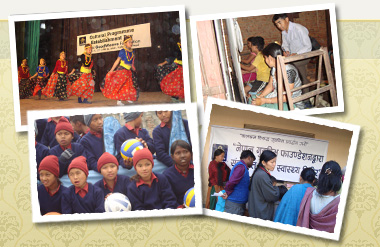
Through its multi-pronged approach along with Inspection, Monitoring and Certification mechanism, GoodWeave tries to maintain child labor free environment in the Nepali carpet industry in preventing children to enter into the factories as child laborers. On the other hand, it provides meaningful alternatives like education, rehabilitation and skills development trainings to the children through its various programs and activities.
Learn more about Nepal GoodWeave Foundation
|
|
|
|
|
| |
|
|
|
|